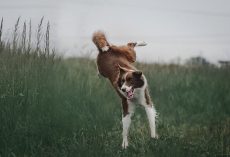
Your dog’s joy is adorable — until those happy jumps nearly knock you over or leave scratch marks down your legs. Cute or not, teaching your dog not to jump is important for everyone’s safety and comfort.
Here’s why dogs jump, why it matters, and how to train the behavior away in a kind, effective way.
Why Dogs Jump in the First Place
Before you can teach your dog to stop jumping, it helps to know why he’s doing it. Most jumping comes down to one thing: it works. Whether or not you mean to, you might be rewarding the behavior.
Here are the most common reasons dogs jump:
1. They Want Your Attention
Dogs quickly learn that jumping gets a reaction — eye contact, talking, petting, or even being picked up. Any attention (positive or negative) can reinforce the habit.
2. They’re Trying to Reach Something
Whether it’s food on the counter or a toy they spotted, jumping can get them closer to what they want. If they successfully snag something once, they’ll absolutely try again.
3. They’re Just Really Excited
Some dogs physically can’t contain their enthusiasm. Seeing you, spotting a leash, or hearing the doorbell can make your pup spring into the air.
Why You Should Curb Jumping
Even if your dog is small, jumping can cause problems:
- Large dogs can knock people down, especially children, older guests, or those who are unsteady on their feet.
- Even tiny pups can scratch skin or snag clothes.
- Visitors who aren’t dog lovers might find it overwhelming.
- Dirty paws on clean clothes? Never fun.
Teaching your dog not to jump helps keep interactions safe and stress-free for everyone.
How to Train Your Dog to Stop Jumping
Stopping the behavior is all about consistency and smart training. Here are the most effective strategies:
Tip 1: Don’t Reinforce the Jumping
Pushing your dog away, scolding him, saying his name, or even looking at him all count as attention. And attention = reward for a jumping dog.
Instead?
Completely ignore him until all four paws are on the ground.
Make sure everyone in your household responds the same way so your dog doesn’t get mixed signals.
Tip 2: Learn to “Ignore” the Right Way
Turning your back is key. If your dog keeps pawing at you, calmly walk away or slip behind a door for 10 seconds. No talking. No touching. No eye contact.
If you’re sitting, rotate your body away until he settles with his paws on the floor.
Tip 3: Reward Four Paws on the Ground
If ignoring teaches what doesn’t work, rewarding teaches what does.
Keep treats or a favorite toy handy and praise your dog the moment his paws touch the ground — especially in situations where he’s most tempted to jump.
If your dog is food-motivated, then treats are definitely the way to go.
Try these Blue Buffalo training treats from Amazon
If your dog is toy-motivated, having a few good ones nearby could be an effective reward, too.
Or these ZippyPaws squeaky toys from Amazon
And make sure you’re always ready to reward your BFF. Good behaviors grow when you pay attention to them.
Tip 4: Try Tether Training
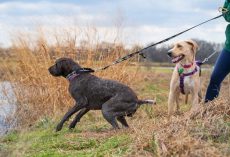
If your dog is extra persistent, tether him using his leash to a sturdy piece of furniture.
Then practice approaching him.
- If he stays grounded, toss a treat.
- If he jumps, back away and try again.
He’ll learn that jumping makes you retreat, while staying calm gets rewards — and your attention.
Tip 5: Use Entryway Distractions
If your dog launches into the air the moment you come home, drop treats or toss a toy away from the door as soon as you walk in. Redirecting that excitement prevents the jump before it starts.
Tip 6: Step on the Leash During Walks
For social butterflies who jump on every stranger, step on your dog’s leash before someone approaches. He’ll still be able to sit or stand comfortably, but won’t be able to jump.
Tip 7: Keep Counters Clear
Jumping for food is intensely self-rewarding. Prevent your dog from ever scoring a countertop snack by pushing items far back — or blocking kitchen access with a baby gate if needed.
Tip 8: Teach a Solid “Sit” Command
A reliable sit can completely replace jumping.
If sitting earns treats, toys, or affection, your dog will start offering it naturally — even in situations where he used to jump.
You’re essentially swapping the unwanted behavior for a polite one.
With patience, consistency, and plenty of rewards for calm behavior, your pup will learn that keeping all four paws on the ground is the best way to earn your attention and affection.
We independently pick all the products we recommend because we love them and think you will too. If you buy a product from a link on our site, we may earn a commission.