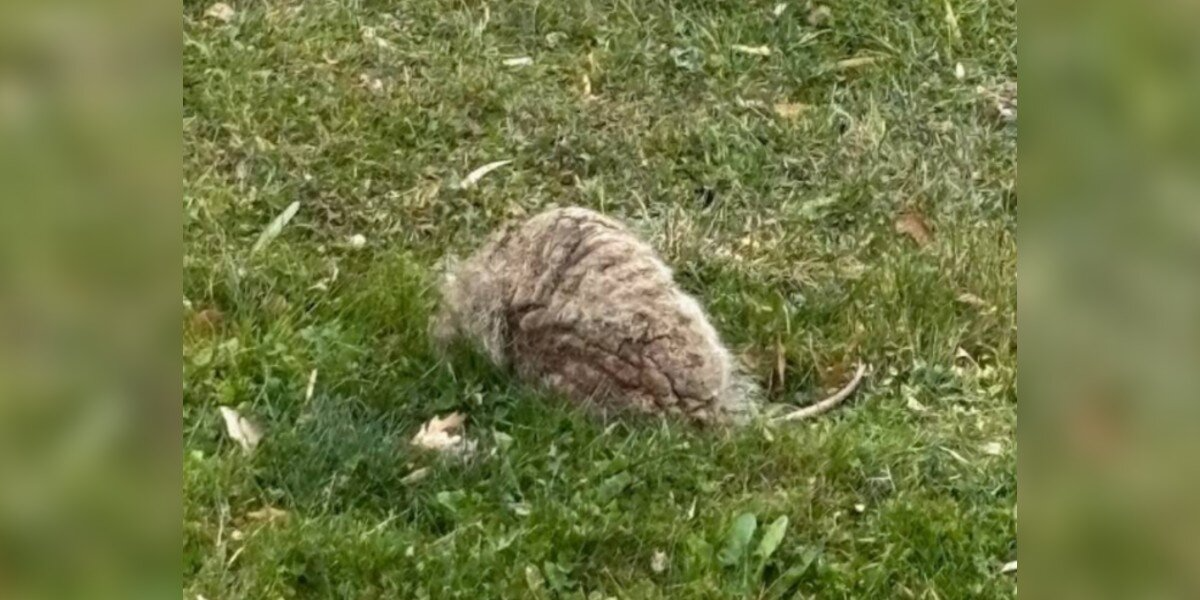

When Erin Gudeman pulled into her driveway in Farmington Hills, Michigan, after a day out with her mom and kids, something strange in the front yard immediately caught their attention.
Sitting motionless in the grass was a dark, misshapen lump.
“At first glance, it looked like a weird, breathing rock,” Gudeman told The Dodo. “Even my mom thought it might be a muddy piece of carpet someone had thrown away. But something about it felt… off.”
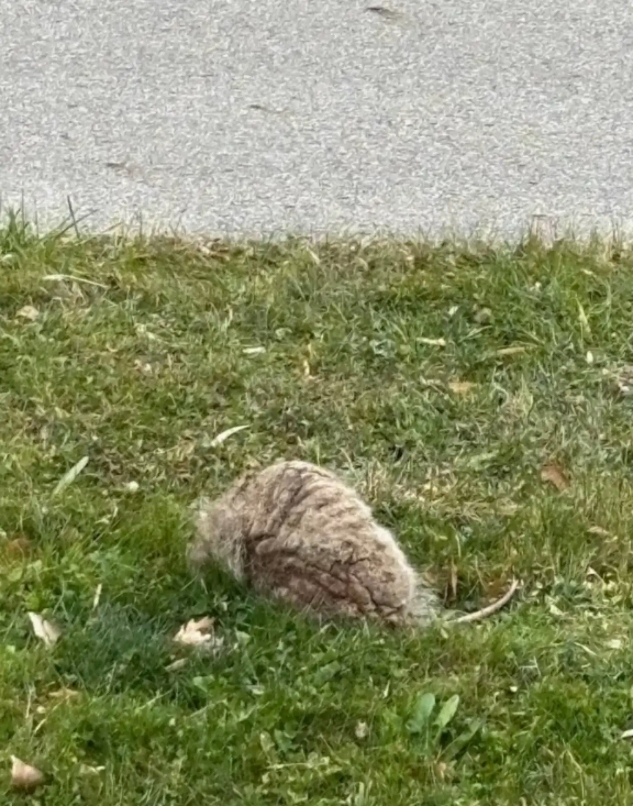
Once inside, the family kept watching through the window. That’s when the “rock” slowly lifted its head.
What they were really looking at was a raccoon — disheveled, exhausted and clearly injured. The animal began limping across the yard before curling up behind an inflatable Christmas dinosaur near the front porch.
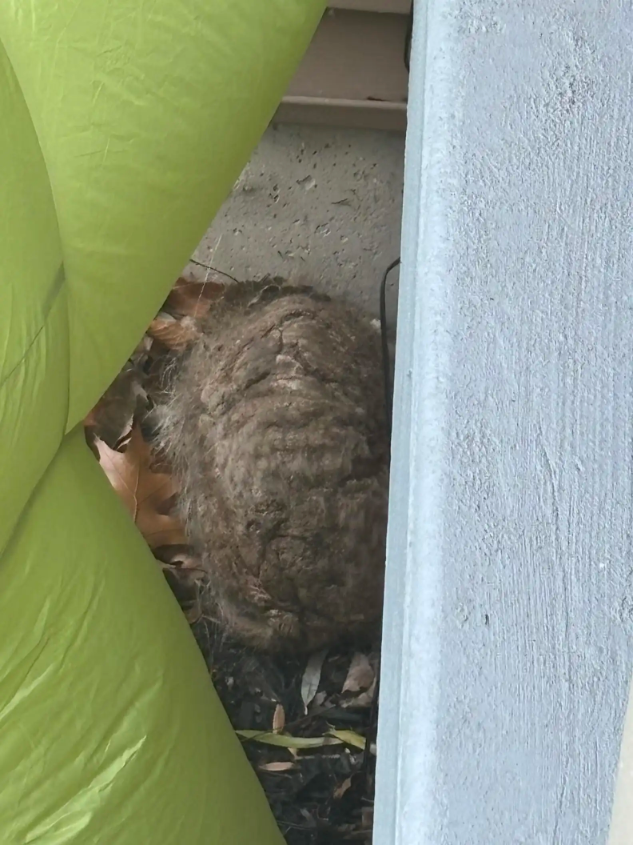
“That’s when we knew,” Gudeman said. “This wasn’t just something odd in the yard. This was an animal who desperately needed help.”
Unsure what to do, Gudeman reached out to a friend and posted in a Michigan wildlife Facebook group, explaining that snow was on the way and she was worried about the animal surviving the night. Forecasts predicted more than a foot of snow within hours.
Her message quickly reached Theresa Carroll of Halfway Home Wildlife Rehab, who confirmed she had space for the raccoon. Within 20 minutes, a volunteer arrived, gently secured the animal and rushed her to safety.
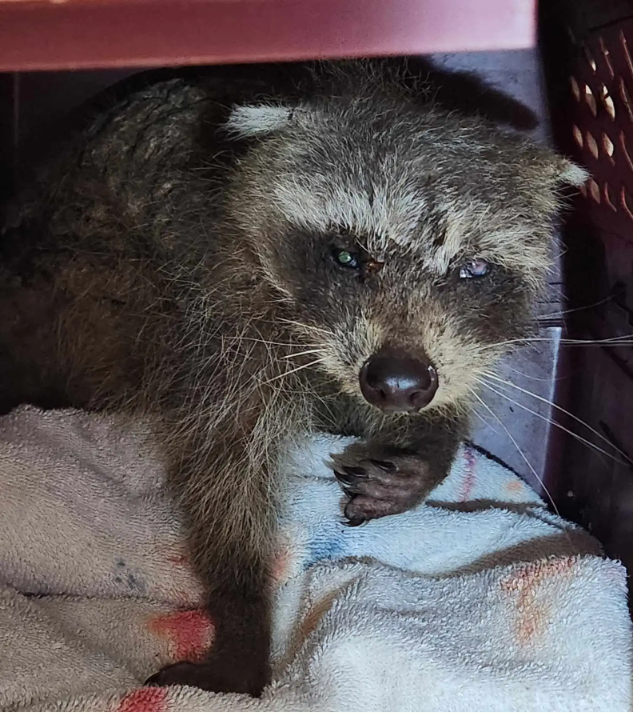
When Carroll examined the raccoon, the problem became immediately clear. She was suffering from sarcoptic mange — a severe mite infestation that causes fur loss, intense itching and painful skin irritation.
“What she has is very typical,” Carroll told The Dodo. “But she also has something going on with her left eye and her left paw. And being so small, the odds were really stacked against her.”
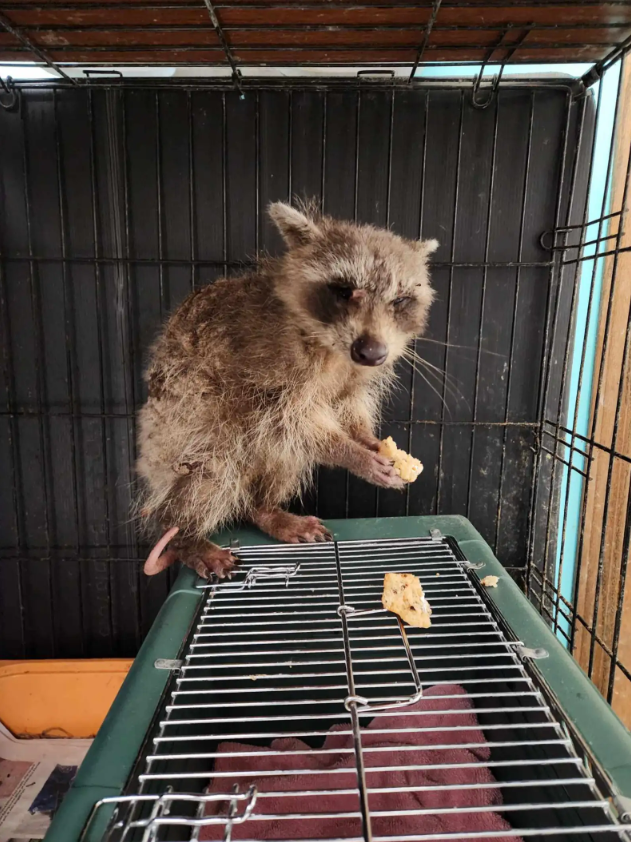
Carroll is certain the raccoon wouldn’t have survived the night if Gudeman hadn’t intervened. Without fur, the animal’s thin body would’ve been fully exposed to freezing temperatures.
“It’s like being naked and someone throwing a concrete blanket over you to keep warm,” Carroll explained.
The first priority was hydration. Mange causes extreme dehydration, so the raccoon was given plenty of fluids, followed by a high-carbohydrate diet to help her body retain moisture and rebuild strength.
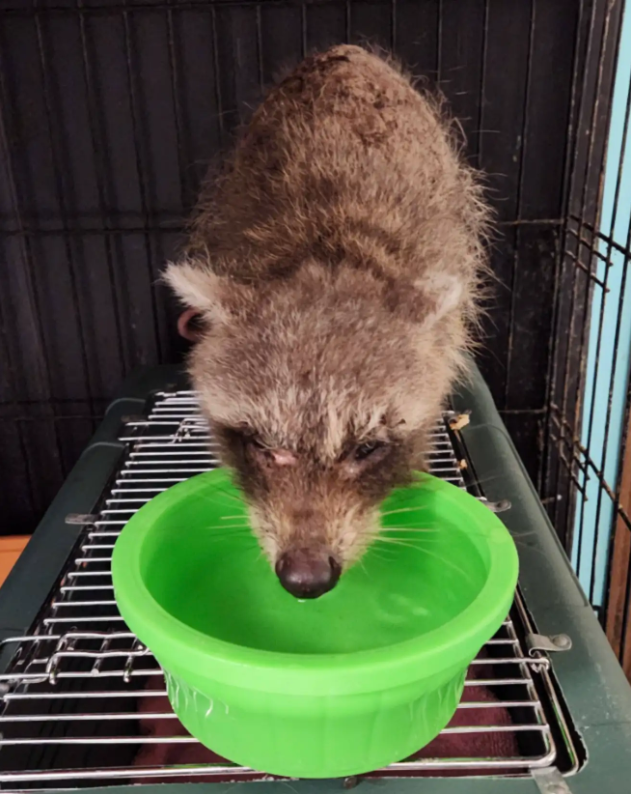
Just days into her recovery, the raccoon is already showing improvement.
“She’s eating and drinking really, really well,” Carroll said.
Though her paw appears injured, Carroll is monitoring it closely rather than bandaging it — raccoons have a reputation for tearing off anything placed on them.
Despite her condition, the raccoon has plenty of fight left in her.
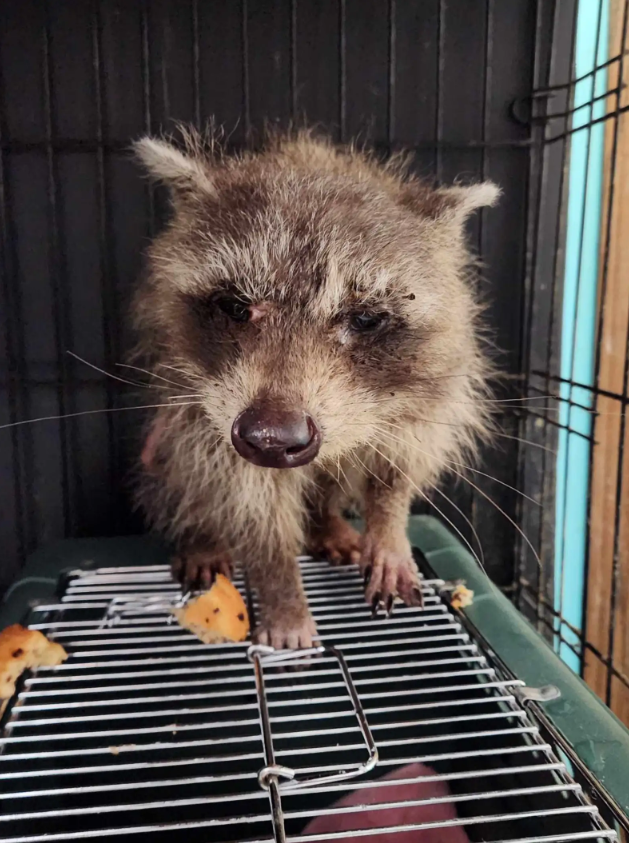
“For only being about seven or eight pounds, she’s a spicy little thing,” Carroll said with a laugh.
She’s also learned how to outsmart her caregiver, carefully picking around medication hidden in bananas. “She’s like, ‘Nice try — I’m not falling for that,’” Carroll joked.
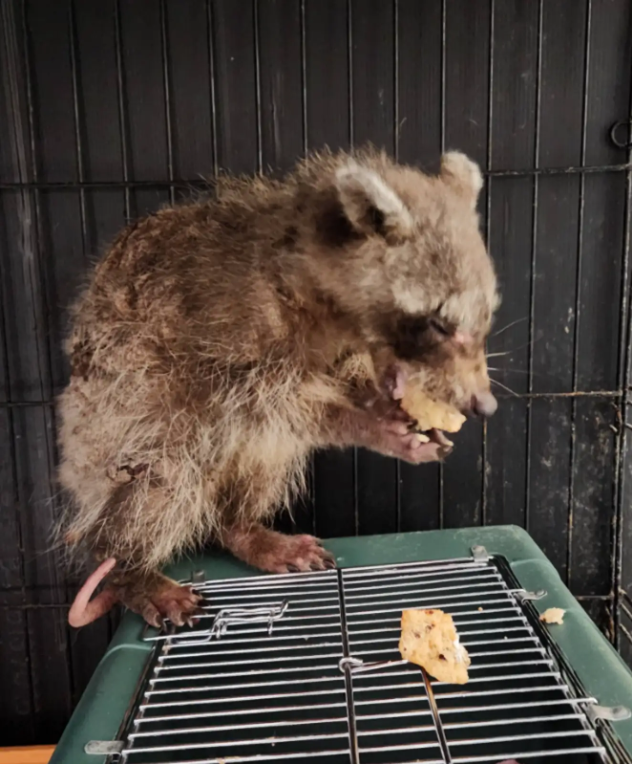
Mange takes weeks to heal, and her fur will take additional time to grow back. All told, the raccoon is expected to remain at Halfway Home Wildlife Rehab for about three months before she’s ready to return to the wild.
Gudeman is grateful she trusted her instincts — and even more grateful for how quickly her community came together.
“Watching so many people step in to help a vulnerable animal so fast was incredibly inspiring,” she said.
If you’d like to help animals like this resilient raccoon, you can support Halfway Home Wildlife Rehab by purchasing items from their wish list.