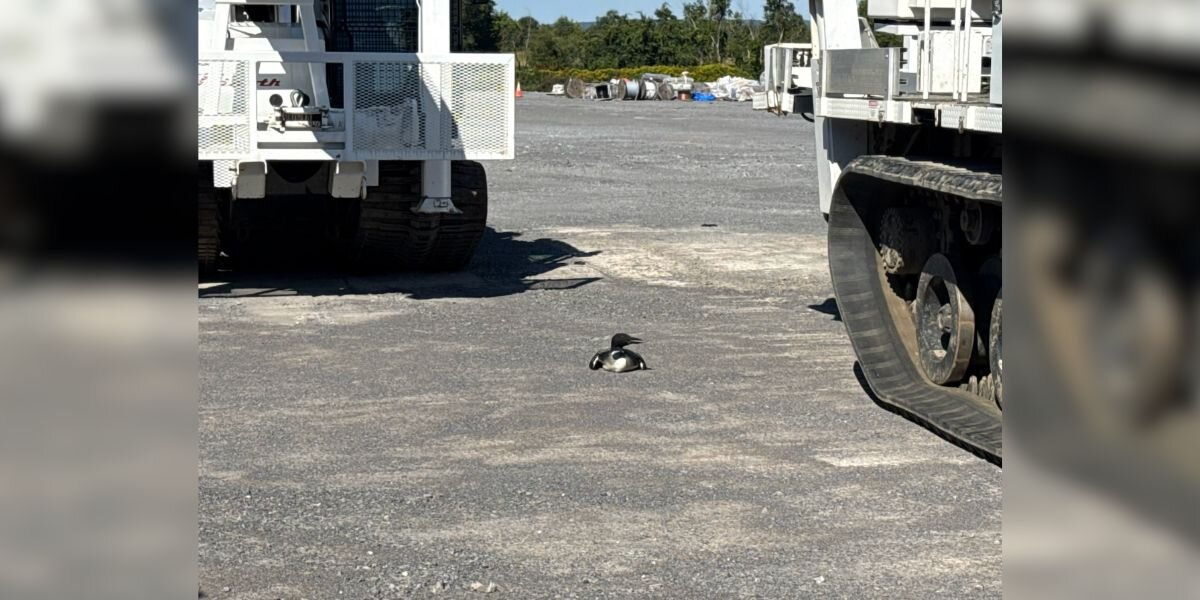
Earlier this month, employees working at a National Grid logistics yard in Boonville, New York, suddenly noticed an unexpected visitor standing near their equipment.
It was a common loon — a striking water bird known for its glossy dark head and beautifully patterned feathers.
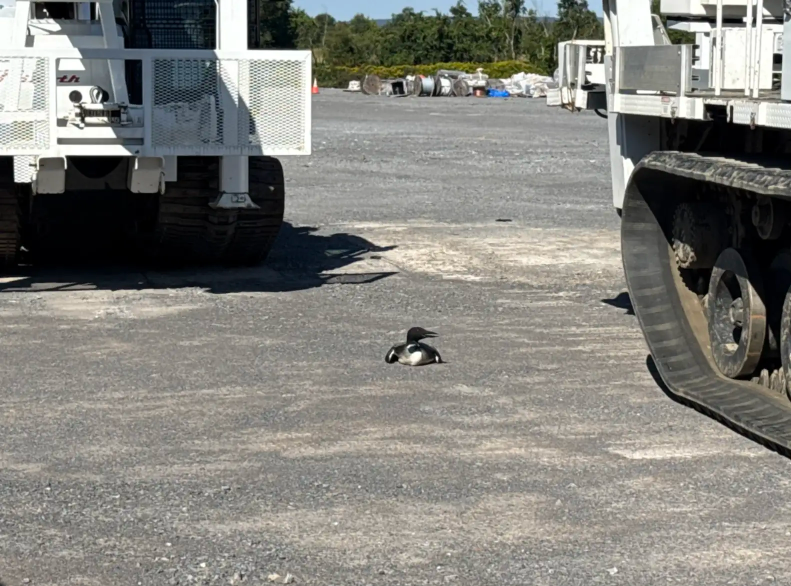
At first glance, the bird didn’t appear injured. But something was clearly wrong.
The loon remained stranded on the ground, unable to move properly or fly away, and concerned workers quickly realized he might be in serious danger.
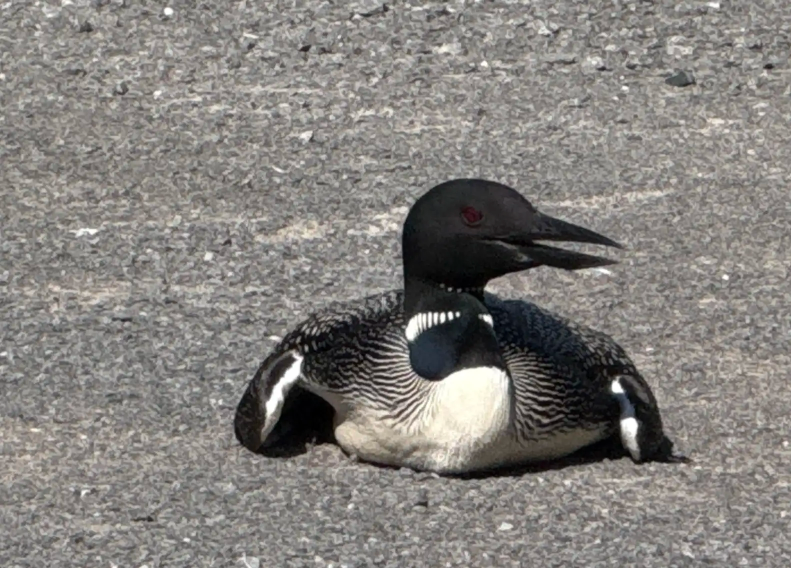
After alerting National Grid’s environmental scientists, the team began researching the situation and soon discovered the bird was trapped in a surprisingly common but dangerous predicament.
“Loons sometimes mistake gravel lots or large parking areas for bodies of water and attempt to land there,” a company representative explained to The Dodo. “Once they’re on land, their anatomy makes it extremely difficult for them to move or take off again.”
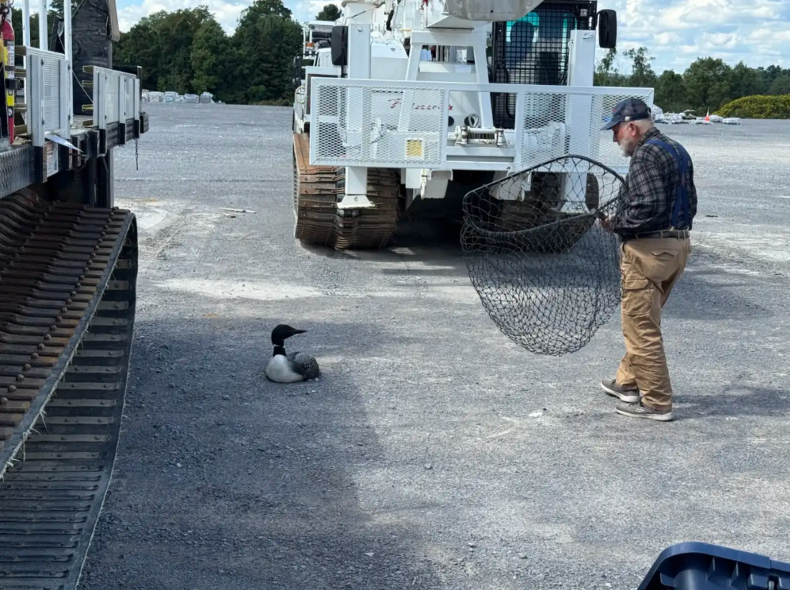
Unlike many birds, loons require a long stretch of open water to build enough momentum for flight. Without help, becoming stranded on solid ground can quickly turn deadly.
Knowing time was critical, workers contacted the New York State Department of Environmental Conservation, which connected them with the Adirondack Center for Loon Conservation.
Soon afterward, trained volunteer Gary Lee arrived to assist with the rescue.
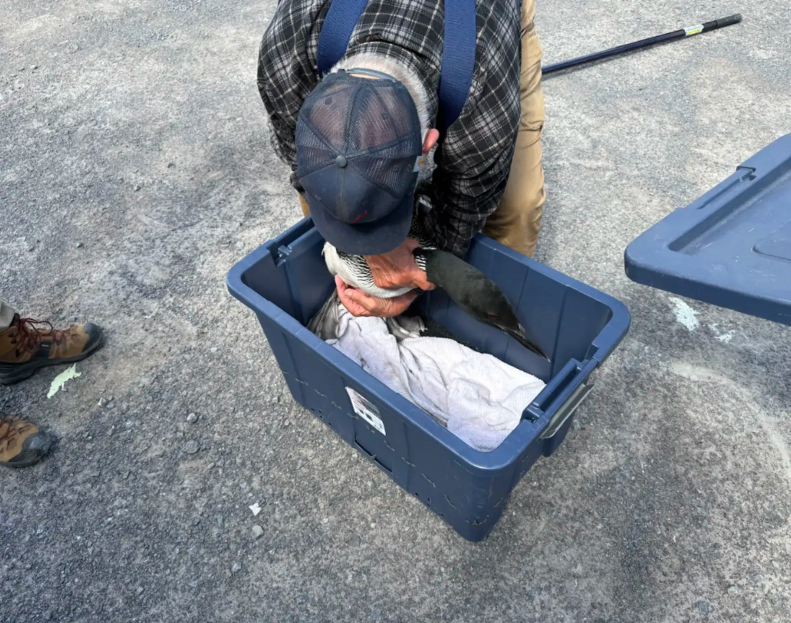
Lee carefully secured the frightened bird and transported him to a safe location where rescuers could examine him more closely. Thankfully, the loon had not suffered any injuries and was simply exhausted and disoriented after landing in the wrong place.
Once rescuers confirmed he was healthy, they brought the loon to a pond near Saranac Lake and released him back into the water where he belonged.
Thanks to the fast actions and compassion of everyone involved, the beautiful bird was given a second chance before his situation became fatal.
Now safely back on the water, the loon can continue living freely in the wild — hopefully steering clear of parking lots from now on.