
Life on Shamrock Island — a 110-acre protected preserve off the Texas Gulf Coast — is usually calm. The small island is home to 19 species of waterbirds living undisturbed under the care of The Nature Conservancy.
But that peace was shattered when a sudden hail storm swept through, leaving hundreds of birds injured and struggling to survive.

When word reached the mainland, wildlife advocates rushed to respond. Teams from Amos Rehabilitation Keep (ARK), a conservation and rehabilitation program at the University of Texas at Austin’s Marine Science Institute, traveled to the island’s southern end — and were stunned by what they found.

“Some birds had severe head trauma, others were extremely weak and lethargic, and many had badly fractured wings,” ARK staff supervisor Andrew Orgill told The Dodo.

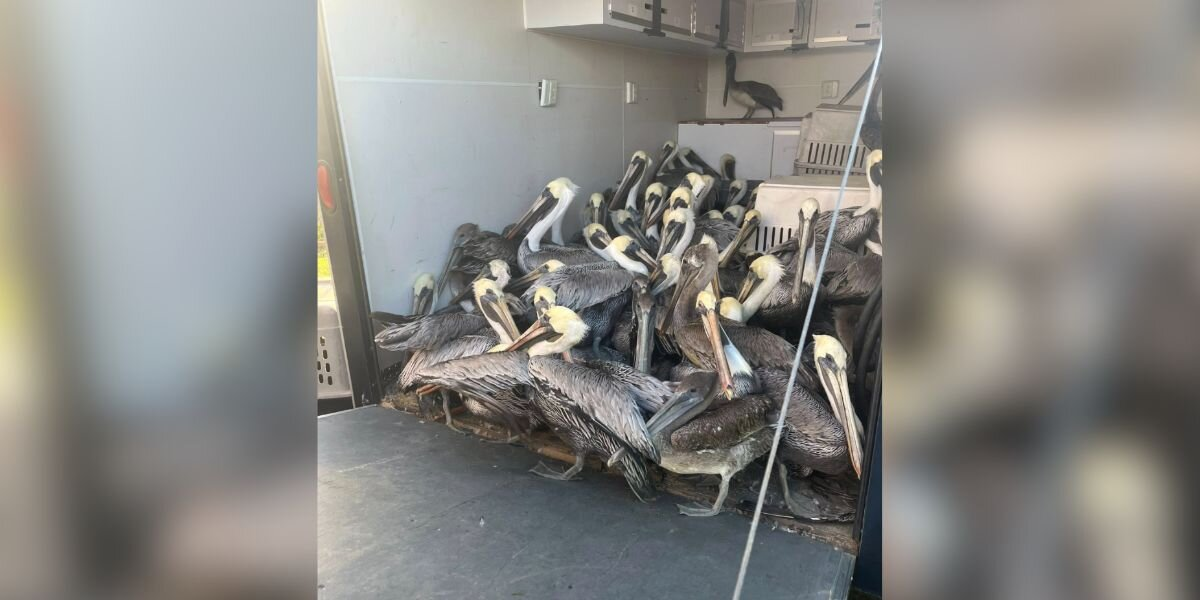
With help from multiple partners — including Texas Parks & Wildlife Department, the Coastal Bend Bays and Estuaries Program, the Harte Research Institute and the Texas State Aquarium — rescuers began the massive task of transporting injured birds off the island. Nearly 390 birds were moved to ARK’s rehabilitation facility for urgent medical care.
“We started with the most critical cases and worked our way through the rest,” Orgill said.

Currently, about 120 birds remain under ARK’s care, while others have been transferred to Gulf Coast Wildlife Rehabilitation and Wings Rescue Center. Some birds suffered only bruising, while others sustained fractures that may take up to five weeks to heal. Despite the long road ahead, rescuers remain hopeful.
“We’re optimistic that many of them will make a full recovery,” Orgill said.

Most of the affected birds were eastern brown pelicans — striking seabirds with long bills and silvery-gray feathers. Though the species was removed from the endangered list within the last two decades, Orgill explained that extreme weather events like this can still pose serious threats to their recovering population.
That’s why every effort is being made to ensure each bird receives the care it needs.
“Getting as many birds as possible back into the wild is incredibly important,” Orgill said.
Thanks to swift action, teamwork and tireless dedication, hundreds of pelicans now have a second chance — and hope remains that Shamrock Island’s skies will soon be filled with wings again.